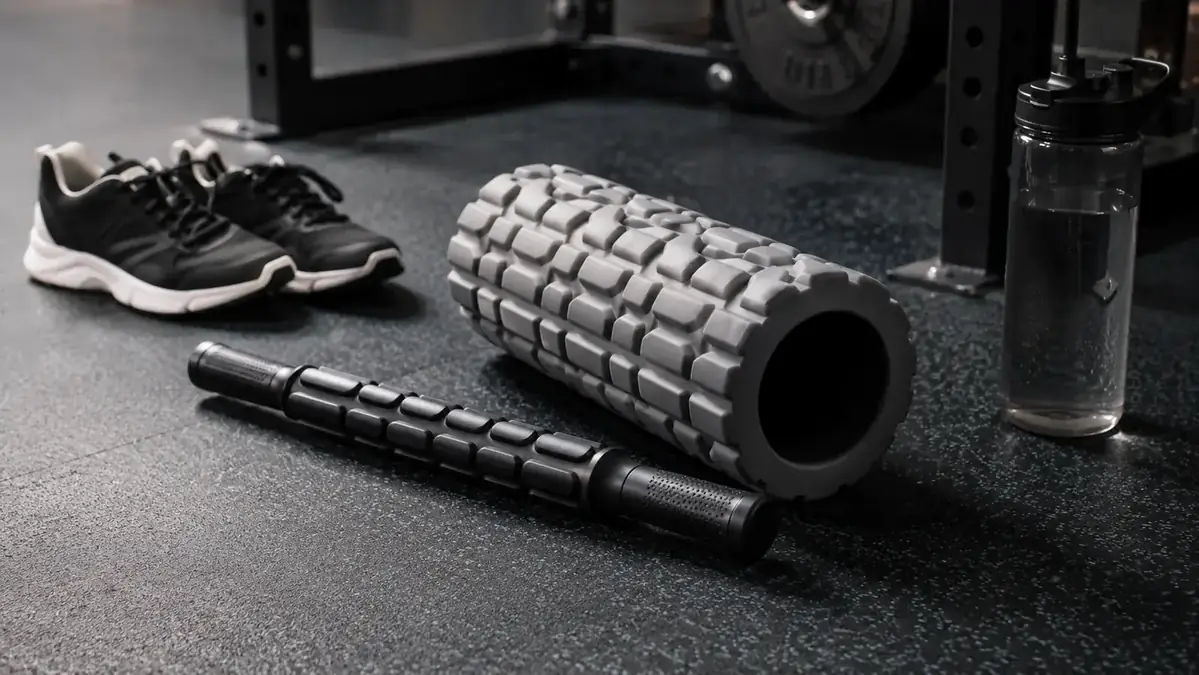
If you have ever done a heavy leg day and stared at both a foam roller and a roller stick wondering which one to grab first, you are not alone. I get this question constantly from runners and lifters who own both tools and still are not sure which one earns prime position in the recovery bag. Short answer: the Idson Muscle Roller Stick is the more practical, portable, and pressure-precise option for most leg-day soreness, especially in the calves, hamstrings, and quads where a stick outperforms a cylinder every time. But the foam roller has a real role, and knowing when to reach for each one is what this piece is about.
I have been using a muscle roller stick on my own legs for years, and I have put clients through both tools in post-workout recovery sessions. The differences are practical and meaningful, not marketing copy. Let me walk you through them.
| Muscle Roller Stick | Foam Roller for Leg Day Recovery | |
|---|---|---|
| Price (typical) | Budget-friendly | Budget to mid-range depending on density |
| Portability | Fits in a gym bag or jacket pocket | Bulky, rarely travels well |
| Pressure Control | High: both hands let you dial exact pressure | Low: pressure is set by your body weight |
| Best Muscle Groups | Calves, quads, hamstrings, shins | IT band, glutes, thoracic spine, lats |
| Targeted Spot Work | Excellent: hold on a knot and work it | Limited: hard to isolate a single tight spot |
| Solo Use | Easy: no floor space needed, use seated or standing | Requires clean floor space and getting down and up |
| Learning Curve | Minimal: intuitive grip-and-roll motion | Moderate: positioning requires practice to do correctly |
Where the Idson Roller Stick Wins
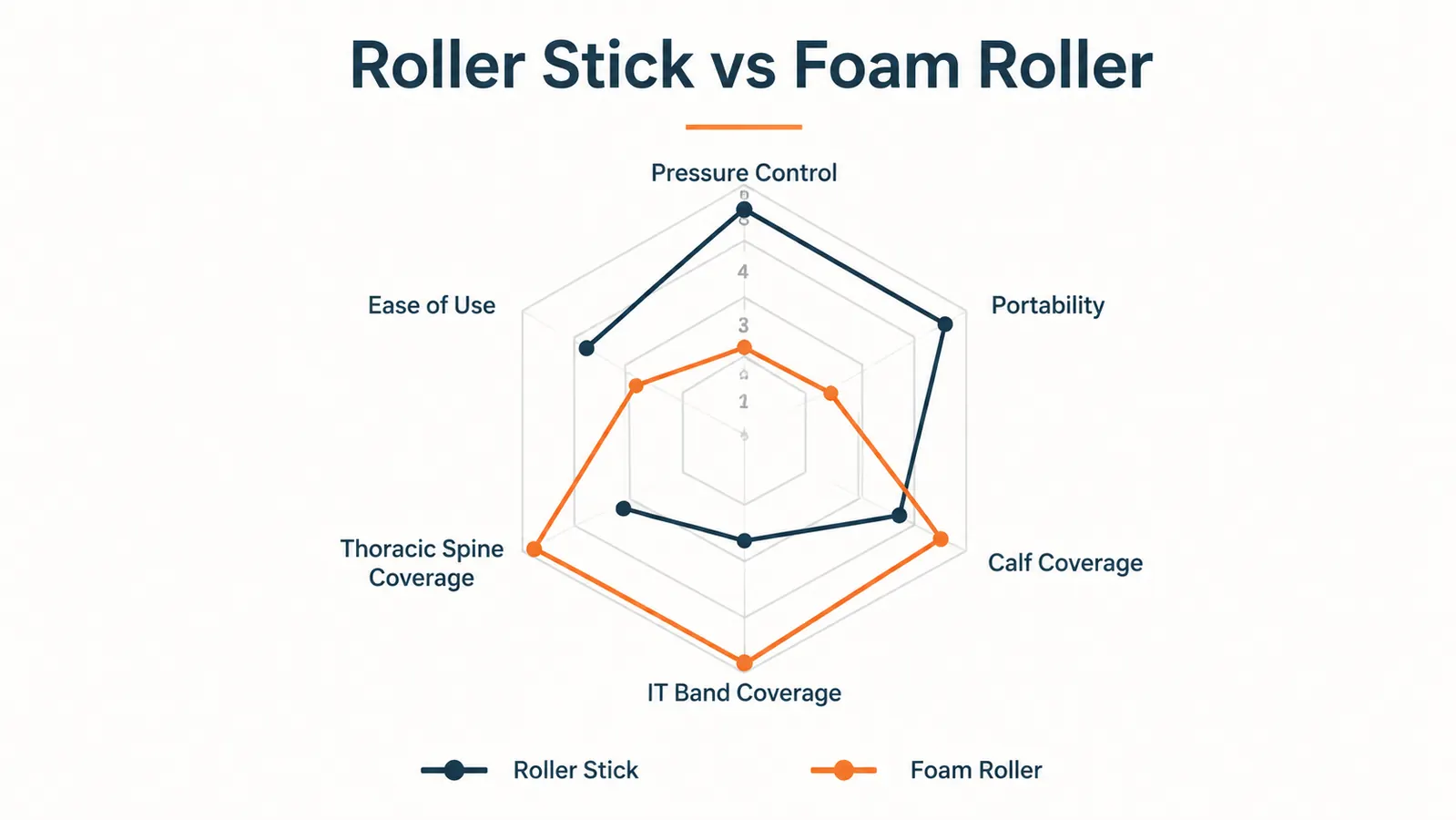
The biggest advantage of a muscle roller stick is pressure control. When you use a foam roller, your body weight sets the pressure and you can not easily back off or increase it mid-roll without shifting position. With the Idson stick, both hands are on the handles and you are in charge of exactly how hard the rollers press into the muscle. For tight calves that are borderline tender after a long run, that control matters a lot. You can start light, find the knot, then add pressure gradually without dumping your full weight onto a spot that is not ready for it.
Portability is the second win. The Idson stick is roughly the size of a long water bottle and weighs almost nothing. It fits in the side pocket of most gym bags without taking up real estate. A foam roller does not go in a bag at all unless you buy a short travel version, and even then it takes up the whole bag. For runners who want to roll out calves and hamstrings at the track or in a hotel room, the stick is the only realistic option. I have carried the Idson on trips and never once thought to bring a foam roller.
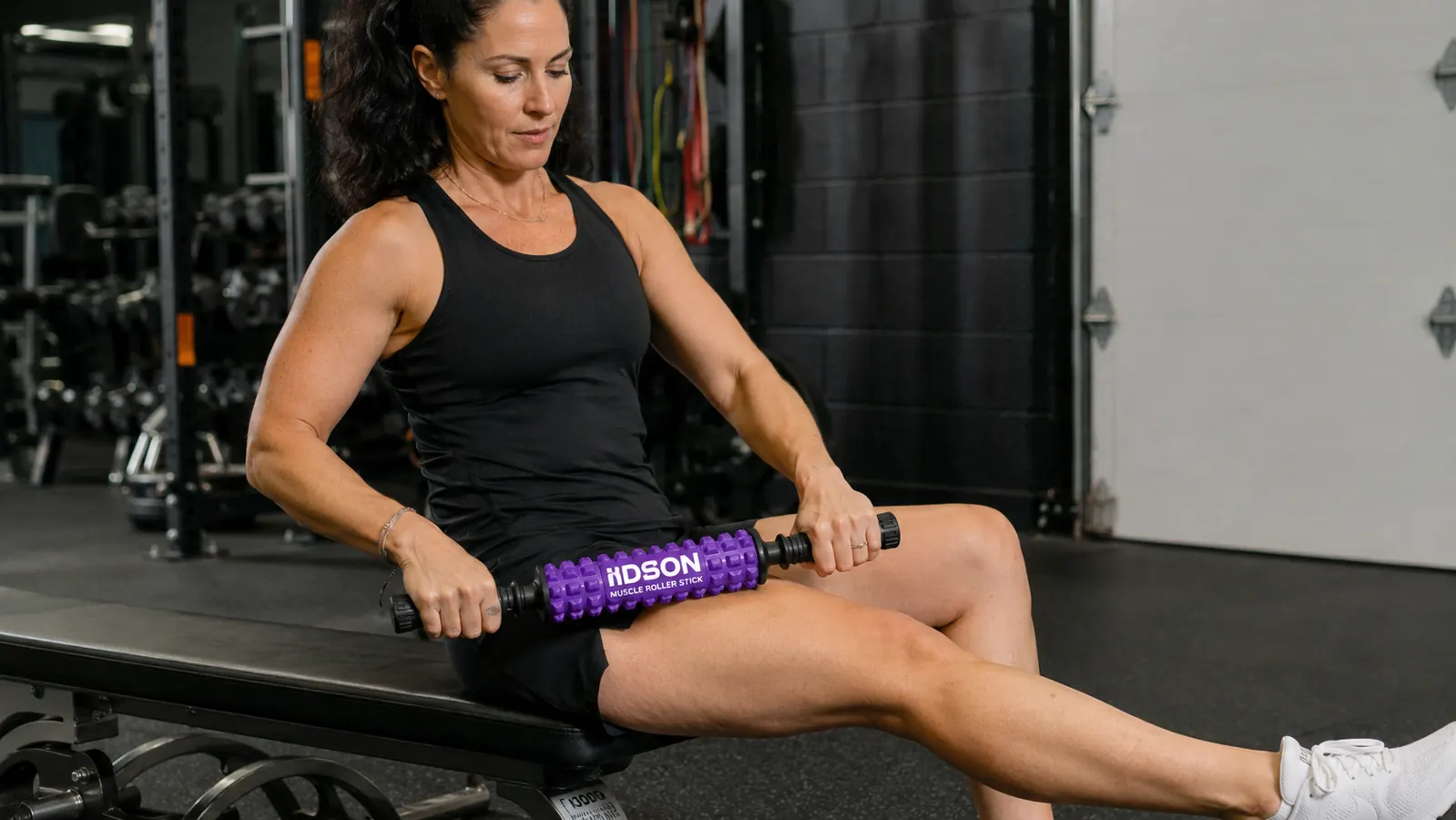
The stick is also substantially more accessible for people who find getting down on the floor difficult. You can use it seated on a bench, standing against a wall, or sitting in a chair at your desk. That alone makes it more likely you will actually use it consistently, which matters more than which tool is theoretically superior.
Where the Foam Roller Wins
The foam roller has a clear edge when it comes to large surface areas and the muscles you roll by lying on the cylinder. The IT band and outer thigh are notoriously hard to address with a hand-held stick because you can not generate the lateral compression that a roller achieves when you lie on your side and use your body weight to sink in. The glutes and piriformis also respond well to the seated foam roller technique, where you cross one ankle over the opposite knee and let your bodyweight work. A stick cannot replicate that.
Thoracic spine mobility is another area where a foam roller genuinely stands out. Placing a roller perpendicular to your spine and extending over it opens up the upper back in a way no hand-held tool can match. If you are a desk worker whose upper back gets stiff from sitting, a foam roller delivers something unique. The roller stick does not compete here.
The roller stick wins on calves, quads, hamstrings, and shins. The foam roller wins on IT band, glutes, and thoracic spine. Pick the tool that matches where you are sore, not the one that just got recommended online.
Leg Day Specifically: Why the Stick Has the Edge
Post-leg-day soreness tends to concentrate in the quads, hamstrings, calves, and shins. These are long muscles that run in a linear direction, and a roller stick that moves along the length of the muscle is extremely well-suited to addressing them. You can position the stick on your quad while seated, grip both handles, and roll from knee to hip with consistent pressure along the exact line the muscle runs. That precision is harder to replicate on a foam roller, where you have to reposition your whole body every few inches.
For calves in particular, the stick has no real competition among simple tools. After squats and leg press sessions, the calves often take secondary soreness from the stabilization demand. Rolling them with a stick, applied firmly from heel to just below the knee, takes about 90 seconds per leg and makes a noticeable difference in how tight they feel the next morning. Trying to do the same on a foam roller requires sitting on the floor with your calf resting on the cylinder, which many people find awkward to sustain for more than a few passes.
If your legs are what is sore and you want one tool that handles it efficiently, the Idson roller stick is the more practical answer. Budget-priced, it is also the cheaper entry point, which makes it an easy recommendation.
Your calves are knotted and you want a faster fix than the foam roller shuffle on the floor
The Idson Muscle Roller Stick handles quads, calves, and hamstrings without requiring floor space, special positioning, or a premium upgrade. It is rated 4.5 stars by more than 26,000 athletes and costs less than a post-workout protein shake.
Amazon Check Today's Price on Amazon →Who Should Buy Which
Get the Idson Muscle Roller Stick if your soreness is primarily in the calves, quads, hamstrings, or shins after leg-focused workouts or runs. Get it also if portability is important, if you want to be able to roll at the gym or at your desk, or if you have any difficulty getting down onto and up from the floor. At this price point it is also the smarter first purchase if you are new to soft tissue recovery and want to start somewhere before committing to a larger setup.
Consider adding a foam roller to your kit if you are already rolling consistently with a stick and want to address IT band tightness, glute stiffness, or thoracic spine mobility. The two tools complement each other well and you do not have to choose permanently. Many of the gym-goers and runners I work with own both, use the stick daily and the foam roller two or three times per week. That combination covers almost every common recovery need.
If budget or space is a constraint and you have to pick one, pick the stick. The muscle groups you use most in any standard leg-day or running protocol are the ones where a roller stick performs best. You can always add a foam roller later.
Worth noting: neither a roller stick nor a foam roller is a substitute for professional care if you are dealing with an actual injury, persistent pain, or any condition that has been diagnosed or is limiting your training. These are wellness and recovery tools for typical post-workout soreness, not medical devices. If something hurts in a way that does not feel like normal muscle fatigue, get it checked.

A Few Things to Know Before You Buy
The Idson stick's rollers are smooth rather than ridged or knobbed. Some people prefer a textured roller because it creates more surface friction on the skin and feels more aggressive. If you are used to a firm knobbed roller, the Idson will feel noticeably smoother. That is not a flaw, it is a design choice that makes it more comfortable for longer sessions without leaving your skin irritated. For most people, smooth is the better everyday option.
The stick has a slight flex to it, which helps it conform to the contour of your calf or quad rather than bridging awkwardly over the thickest part of the muscle. Stiffer sticks can skip over the belly of the muscle, especially on leaner legs. The flex on the Idson is modest, not floppy, and it works in favor of contact rather than against it.
One honest limitation: the Idson stick is 17 inches long with handles on both ends. That gives you roughly 10 to 11 inches of rolling surface. For very tall athletes with long quads or hamstrings, you may need to reposition more frequently than with a longer stick. It is not a dealbreaker, but worth knowing if you are above about 6 feet 2 inches.
For more detail on technique, including exactly how to roll calves and hamstrings effectively after a run, see the guide on how to roll out tight calves and hamstrings after runs. And if you want a deeper look at the Idson stick on its own merits, the long-term Idson muscle roller stick review covers three months of real use in detail.
Ready to recover smarter after leg day without camping on the gym floor?
The Idson Muscle Roller Stick gives you precise, portable relief for the exact muscles that take the most punishment in any lower-body session. Over 26,000 athletes have rated it 4.5 stars. Check the current price on Amazon before you leave.
Amazon Check Today's Price on Amazon →