
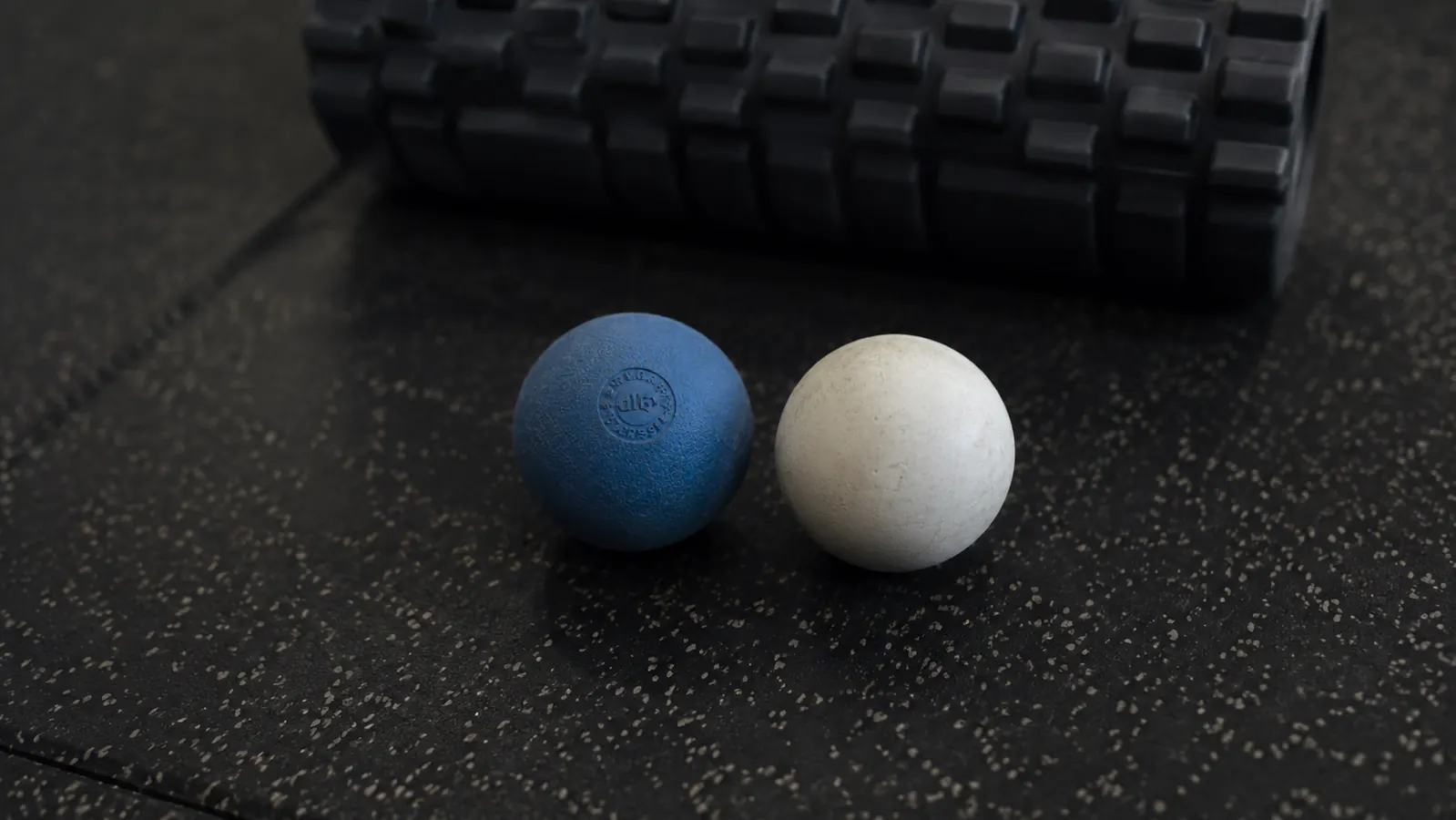
Let me start with the question I kept asking myself before I bought the Kieba lacrosse ball: why would I pay for a branded massage ball when I can walk into any sporting goods store and grab a regulation lacrosse ball for roughly the same price? It is a fair question, and the honest answer is that the difference is real but smaller than the product listing implies. If you want to know whether the Kieba ball is worth it over a plain lacrosse ball, or whether you even need a lacrosse ball at all, I am going to give you the straight version here, including the parts that most reviewers leave out.
The Kieba Massage Lacrosse Ball (ASIN B017V7UKW2) is a solid rubber ball marketed for myofascial release, trigger point therapy, and yoga. It has nearly 25,000 reviews on Amazon with a 4.7-star rating, which is genuinely impressive for a product that has almost no features. I bought one to compare it directly with a standard sporting goods lacrosse ball, and I used both on the same muscle groups across the same weeks so the comparison would be apples-to-apples. Here is what I found.
The Quick Verdict
Better surface than a sporting goods ball in one specific way, but not a must-have upgrade. If you already own a plain lacrosse ball, you probably do not need to switch. If you are buying for the first time, the Kieba is a solid pick at the current price.
Amazon Check Today's Price →Still rolling on a foam roller that never quite reaches that one stubborn spot?
A lacrosse ball gets into the precise areas a foam roller skips. The Kieba has a 4.7-star rating from nearly 25,000 buyers. If you decide it is right for you, check the current price below before it changes.
Amazon Check Today's Price on Amazon →The Gotcha Nobody Mentions: Technique Matters More Than the Ball
Before I get into the product specifics, I want to say something that no review on Amazon will tell you: the ball itself is almost irrelevant if you do not know what you are doing with it. I have worked with clients who bought lacrosse balls, rolled them around vaguely for a few minutes, felt nothing helpful, and gave up. That is not a ball problem. It is a technique problem.
Effective trigger point work with a lacrosse ball requires you to find the tender spot, apply steady pressure on it, hold for thirty to ninety seconds without rolling, and breathe into it. Most people do the opposite: they roll back and forth quickly, which does almost nothing. If you are not getting results from any lacrosse ball, check your technique before you blame the tool. I point this out because it affects how you interpret every review you read, including this one. The people reporting dramatic results are almost certainly using it correctly. The people reporting nothing are often not.
The One Real Difference: The Seam
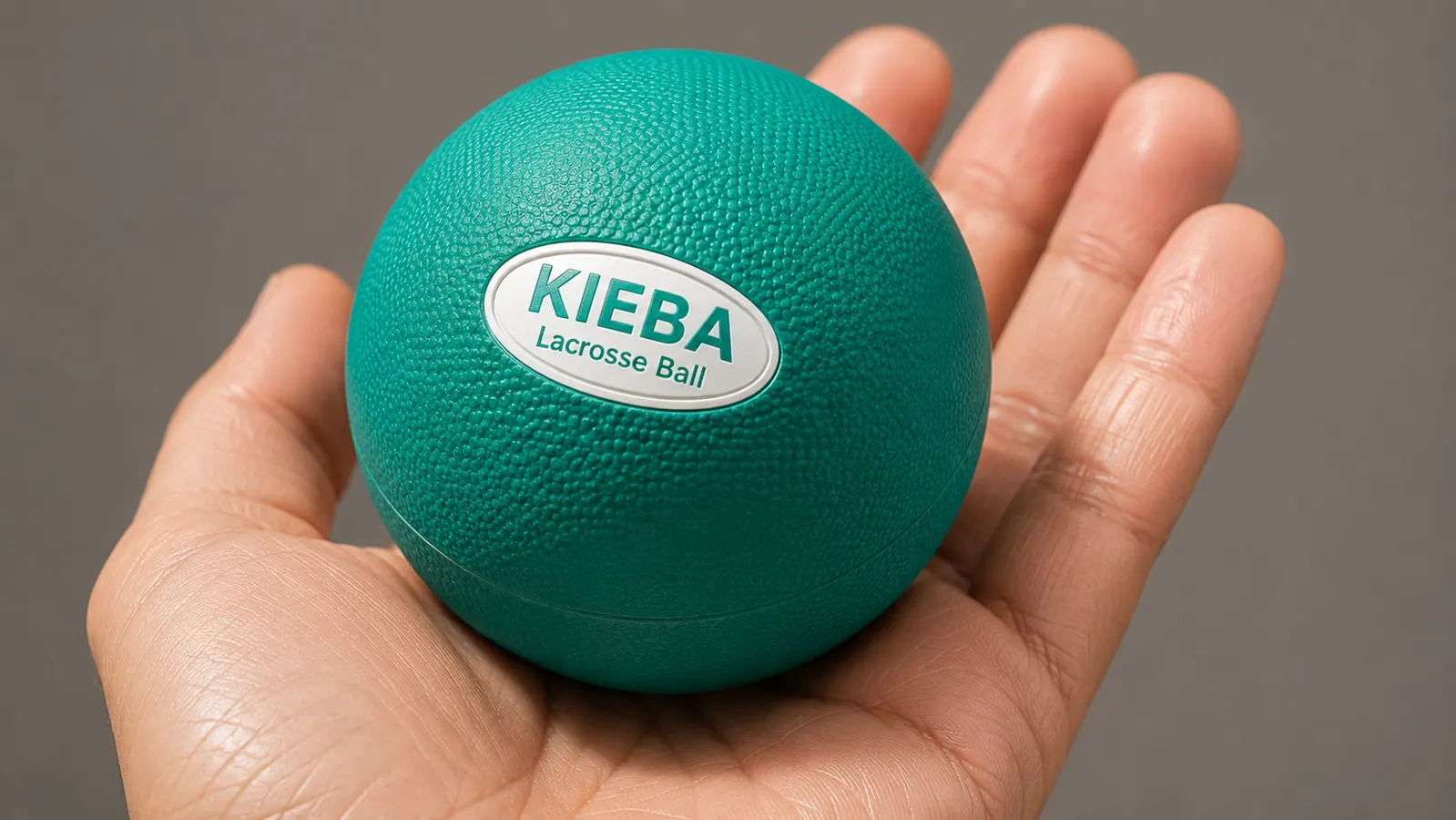
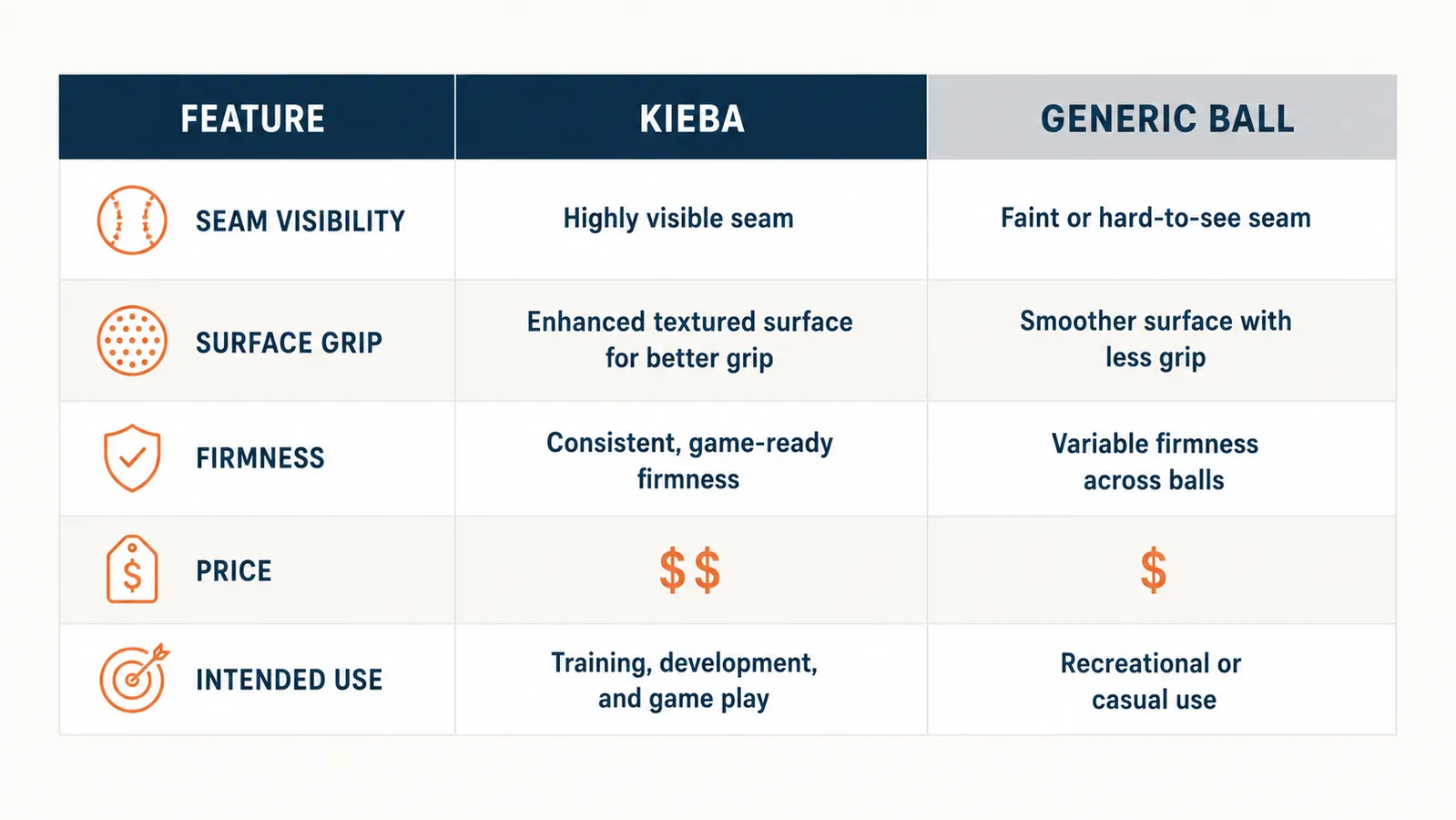
Here is the actual case for buying the Kieba over a sporting goods lacrosse ball. Regulation lacrosse balls have a raised seam that runs around the circumference of the ball. You feel that seam every time the ball rotates across your skin. On large muscle groups it is a minor annoyance. On sensitive spots like the back of the shoulder capsule or the base of the skull, that seam creates an uneven pressure point that interrupts the steady compression you are trying to apply.
The Kieba ball has a much less prominent seam. In the typical contact area when you press it against a wall or roll it under your foot, I did not feel the seam at all. That is the tangible difference. It is not marketing language, it is a genuine quality-of-life improvement for specific use cases. If you do a lot of work on small, sensitive areas like the thoracic spine, posterior shoulder, or the soles of your feet, the cleaner surface matters more than you would expect.
On large muscle groups like the glutes or IT band area, the seam difference is barely noticeable. The sporting goods ball works nearly as well there. So the Kieba earns its spot based on that one real advantage, not because it has some special rubber compound or density that no other ball has.
Firmness: Is It Too Hard for Beginners?
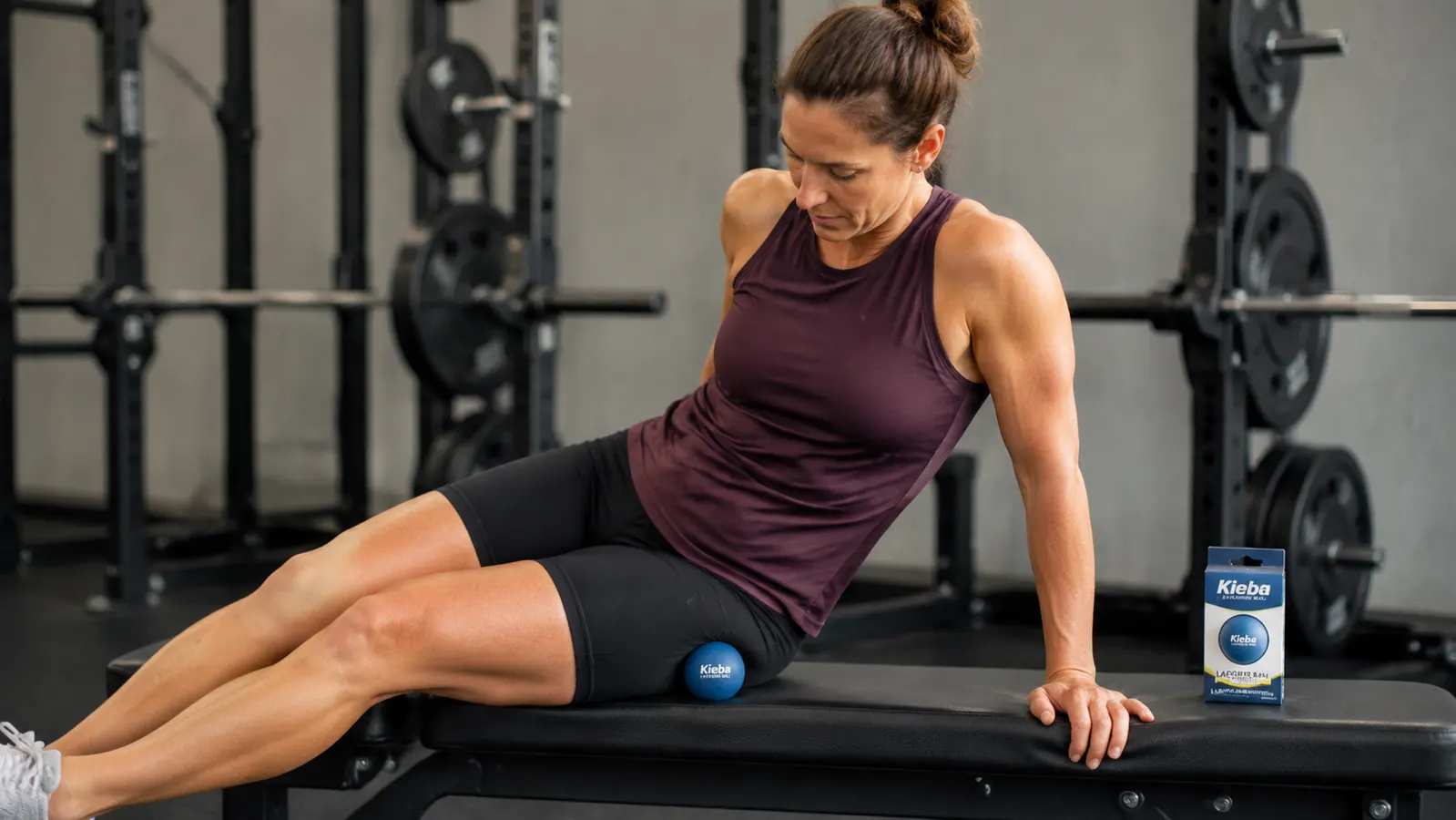
The Kieba ball is quite firm. This is where I want to be direct with beginners, because several Amazon reviews describe the ball as painful in a way that made them return it. That response is understandable, but it also tells me those buyers pressed too hard too soon. A dense rubber ball against your piriformis with your full body weight is going to be intense. That is not a defect. But it does mean this tool requires some calibration.
When I introduced the ball to Marcus, a 34-year-old client who lifts four days a week and had never done any trigger point work, his first session on his upper back lasted about ninety seconds before he said it was too much. We backed off, used just his arm weight against a wall instead of leaning his full torso into it, and worked up from there over two weeks. By week three he was using it the same way I do. The point: the firmness is correct for the intended purpose, but new users should start with significantly less pressure than they think they need.
If you have very low pain tolerance or are recovering from a soft-tissue injury, a slightly softer ball or a peanut-shaped massage ball may be a better starting point. Lacrosse balls, including the Kieba, are firmly in the advanced-pressure category of recovery tools.
The firmness is not a flaw. But I have seen too many people give up on this tool in week one because they did not understand that you start light and earn the pressure. Give it two weeks before you decide it is not for you.
What the Rating Does Not Tell You
A 4.7-star rating across nearly 25,000 reviews is legitimately good. But ratings like that can sometimes hide important nuance because buyers who see zero results often do not bother reviewing. They just set the ball on a shelf. So let me surface a few patterns from the lower-rated reviews that are worth knowing about before you buy.
The most common complaint in one- and two-star reviews is that the ball did nothing. As I mentioned above, that is almost always a technique problem, not a product problem. The second most common complaint is that it is too painful. That is a pressure calibration problem. The third complaint, which appears in a small number of reviews, is that the color or surface did not match the listing photo exactly. That is cosmetic and has no impact on function.
What you do not see in the reviews: complaints about the ball degrading, losing firmness, cracking, or developing odor over time. That absence tells you something real about the durability. This ball is built to last, and the review corpus over years of sales backs that up.
Who Should Skip the Kieba Specifically
If you already own a regulation lacrosse ball and it is working for you, you do not need this. The improvement is real but incremental. Buy a second ball for a different location (desk, car, travel bag) before you buy a Kieba as a replacement for a ball you already use.
If your main soreness issue is widespread DOMS across large muscle groups after hard sessions, a lacrosse ball of any kind is the wrong tool. It is too small to address diffuse soreness efficiently. A foam roller or a roller stick will cover more ground in the same amount of time. For a direct comparison of which tool handles which job better, see the breakdown on lacrosse ball vs foam roller for trigger point relief.
Anyone with an acute injury, inflamed tissue, varicose veins, or nerve-related pain should not use a lacrosse ball until they have spoken with a physical therapist or physician. This is a self-massage tool designed for healthy tissue maintenance, not treatment of medical conditions. I say this plainly because the label and the product description do not always make it clear enough.
Where It Actually Earns Its Keep
The best use case I have found for the Kieba, after putting it through its paces alongside a sporting goods ball, is the desk worker who carries chronic tension in their upper back and posterior shoulder. Pressing the ball between the upper back and a wall, working along the rhomboids and lower traps in small increments, is one of the faster ways to get meaningful relief from that specific type of accumulated tightness. Two to three minutes per session, five days a week, shows real results in two to three weeks for most people.
It also genuinely earns its keep for foot work. Rolling it across the arch and heel of the foot while seated, using controlled pressure, is one of the easier entry points for people new to trigger point tools because you can modulate the pressure precisely with your own body weight. Start lighter than you think you need to and hold each sore spot for thirty seconds before moving. For specific protocols on different muscle groups, the guide on 10 trigger point spots every gym-goer should target with a massage ball covers the most useful starting points.
For shoulder and neck work, the Kieba's cleaner seam profile gives it a clear edge over a sporting goods ball. The base of the skull, the suboccipital area, and the posterior rotator cuff region are all spots where the ball surface makes a noticeable difference in how the pressure feels. If those areas are where your tension lives, the Kieba is the right call over a plain ball.
What I Liked
- Cleaner seam profile than regulation lacrosse balls, noticeably better for small or sensitive areas
- Consistent firmness that does not degrade over months of regular use
- Low enough price that buying one to test is a low-risk decision
- High review volume gives you confidence the durability claims are not just marketing
- Small and light enough to use at a desk, in a hotel room, or in a gym bag without planning around it
Where It Falls Short
- No meaningful difference from a sporting goods ball on large muscle groups like glutes or IT band
- Firmness is too intense for true beginners who have never done trigger point work before
- No instruction card, carrying case, or guidance on technique included in the package
- If you already own a lacrosse ball that is working, there is little reason to replace it with this
- Not appropriate for inflamed tissue, acute injuries, or nerve-related pain, though the packaging undersells that caution
Who This Is For
The Kieba lacrosse ball makes the most sense for people buying their first trigger point tool and wanting to start with something that is well-reviewed and priced affordably. It also makes sense for anyone who has tried a plain sporting goods ball and found the seam annoying during upper back or shoulder work. And it is a good pick for anyone buying a second ball to keep at a second location. The first-time buyer, the desk worker with shoulder tension, and the gym-goer who needs a portable tool for hotel rooms are the core audience this product actually serves well.
Who Should Skip It
Skip it if you already own a plain lacrosse ball that is working. Skip it if your recovery needs are mostly general soreness across large muscle groups, where a foam roller or roller stick is a better fit. Skip it if you have a diagnosed injury, nerve pain, or inflamed tissue, and see a medical professional first. And skip it if you are the type of person who buys a tool, uses it twice, and loses interest. A lacrosse ball only delivers results through consistent, repeated use over weeks. If that does not match your habits, the tool will sit in a corner regardless of how good the reviews are.
If you have a nagging spot that foam rolling has never fully reached, this is worth trying at the current price.
The Kieba lacrosse ball has a 4.7-star rating from nearly 25,000 buyers. It is one of the most affordable targeted recovery tools you can add to your kit. Check the current price and availability on Amazon below.
Amazon Check Today's Price on Amazon →